




Employment Lawsuits in California
Watching your paycheck fall short of what you earned stirs up real frustration. For California retail and hospitality workers, understanding the timeline of an employment lawsuit is more than curiosity, it means setting expectations and planning your next steps.
Whether your wage theft dispute resolves quickly or turns into a lengthy battle, knowing the key factors that influence settlement timing helps you stand strong and make informed choices.
When Will My Employment Lawsuit Settle?
There’s no single answer because settlement timelines in California employment cases vary dramatically based on dozens of factors. Some wage theft claims settle within 6 to 12 months, while others drag on for 2 to 3 years. The honest truth: you won’t know your exact timeline until your case develops.
Settlement depends heavily on whether your employer wants to fight or negotiate. If your company’s insurance carrier decides early that settling makes financial sense, you could reach an agreement relatively quickly.
But if they believe they can win at trial or drag out litigation until you get exhausted, expect a much longer wait. The strength of your evidence matters too. If you have clear documentation of wage violations, unpaid overtime, or retaliatory actions, your leverage increases significantly.
Most employment cases in California settle before trial. Courts are overwhelmed with cases, and judges actively encourage settlement through mandatory mediation. Once both sides understand their risks, many employers realize settling is cheaper than fighting. However, this only happens after months of discovery, depositions, and legal maneuvering.
Your attorney’s strategy affects timing too. Aggressive litigation can actually speed things up by creating pressure on the other side. Conversely, attempting early settlement discussions with an employer who isn’t ready to talk wastes valuable time.
Understanding wrongful termination settlement amounts helps you evaluate what reasonable compensation looks like in your situation.

Complexity adds months or years. Cases involving multiple violations, numerous employees, or retaliation claims require extensive investigation. A straightforward unpaid overtime dispute settles faster than a case alleging discrimination across your entire department.
The court’s calendar also matters. If your case gets assigned to a judge handling thousands of cases, you’ll wait longer for hearing dates. Some courthouses have backlogs stretching 18 months or more.
Pro tip: Ask your attorney for a realistic timeline estimate within your first month, including best-case and worst-case scenarios. This helps you mentally prepare and plan financially while your case develops.
Why Employment Litigation Takes So Long
Employment lawsuits move at a crawl compared to what most people expect. You might think a straightforward wage theft case could wrap up in months. Reality is messier. The California court system processes thousands of cases annually, and employment disputes aren’t prioritized over criminal matters or family law cases.
Discovery is the biggest time killer. Both sides must exchange documents, emails, text messages, payroll records, and any evidence relevant to your claim. If your employer has poor record-keeping or intentionally buries documents, this phase alone can stretch 6 to 12 months. Your attorney needs time to review everything, identify inconsistencies, and build your case.
Depositions add significant delays. These are sworn interviews where both sides question key witnesses and parties under oath. Scheduling depositions with multiple people, their attorneys, and court reporters requires coordinating calendars weeks or months in advance. A single deposition can last hours, and transcripts take weeks to prepare.
Motions practice slows everything down further. Your employer’s legal team will file motions to dismiss, motions for summary judgment, and various procedural challenges. Each motion requires written responses from your attorney, and judges need time to rule on them. This back and forth can consume 3 to 6 months of your timeline.
Mediation and settlement negotiations happen throughout the process but rarely resolve things quickly. Understanding California employee rights helps you negotiate from a position of knowledge, but these discussions require patience and multiple rounds of offers and counteroffers.
Court backlogs create artificial delays. Trial dates get pushed back repeatedly. Judges get reassigned. Emergency motions from other cases bump your hearing. You could wait 18 months just to get a trial date on the calendar.
Pro tip: Build your financial reserves now so you’re not desperate to settle quickly just because your case takes longer than expected. Financial breathing room gives your attorney leverage in negotiations.
The Timeline for Employment Lawsuit Litigation
A typical employment lawsuit in California follows predictable phases, though the total duration varies wildly. From initial complaint to final resolution, expect anywhere from 18 months to 4 years. Most cases cluster around the 2 to 3-year range, but outliers exist on both ends.
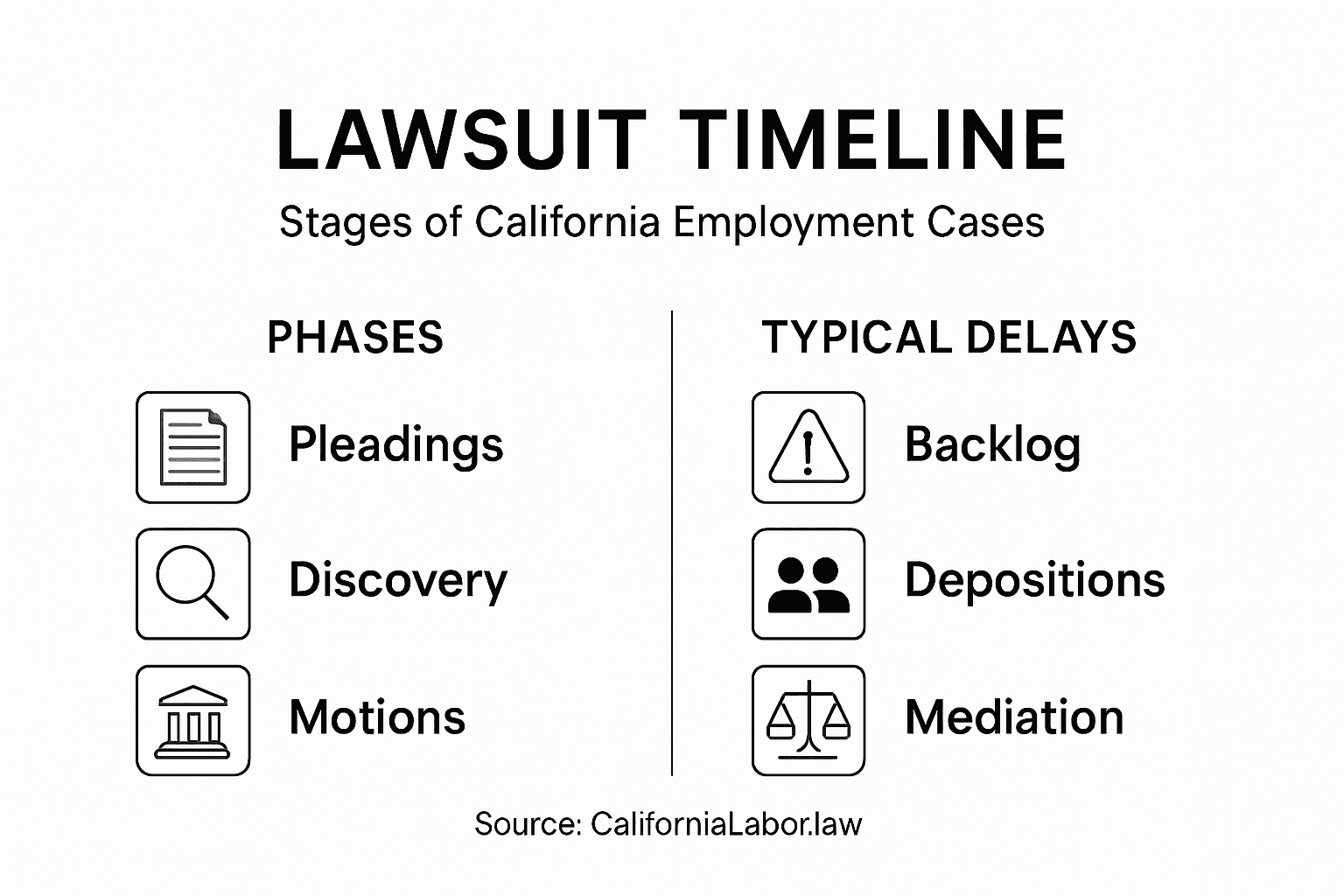
The first phase is the pleadings stage. You file your complaint, your employer responds with an answer or motion to dismiss, and basic procedural matters get resolved. This takes 2 to 4 months. Nothing dramatic happens here, but it officially launches your case into the system.
Discovery follows next and typically consumes 6 to 12 months. This is when both sides request and exchange documents, interrogatories, and requests for admissions. You’ll answer written questions under oath. Your employer will do the same. Depositions happen during this phase too, with schedules stretching across months as attorneys coordinate availability.
Motions practice occurs simultaneously with discovery and afterward. Expect your employer to file a motion for summary judgment arguing there are no disputed facts and they should win without trial. You respond. The judge rules. This entire cycle takes 3 to 6 months. Your attorney’s role becomes critical here, and having skilled employment law representation directly impacts whether weak claims get dismissed early.
Mediation typically happens after discovery concludes. Courts often require it. Both sides meet with a neutral mediator who helps facilitate settlement discussions. If you don’t settle, trial preparation begins. This includes finalizing witness lists, organizing exhibits, and preparing opening statements.
Trial itself might last anywhere from 3 to 10 days depending on complexity. Then judges take weeks or months to issue written decisions. Add another 2 to 4 months here.
Below is a summary of typical phases and estimated timeframes for an employment lawsuit in California:
| Lawsuit Phase | Typical Duration | Main Activities |
|---|---|---|
| Pleadings | 2–4 months | Filing complaint, employer response |
| Discovery | 6–12 months | Evidence exchange, depositions |
| Motions Practice | 3–6 months | Motions to dismiss, summary judgment |
| Mediation/Negotiation | Varies, often post-discovery | Settlement discussions, mediation |
| Trial & Decision | 3–10 days trial; 2–4 months for decision | Trial presentations, verdict |
Pro tip: Request a detailed litigation roadmap from your attorney showing anticipated dates for each phase, so you understand what’s coming and can plan accordingly.
What to Expect as a Plaintiff in California
Being a plaintiff in an employment lawsuit means stepping into a process that’s equal parts tedious and stressful. You’ll spend months answering questions under oath, reviewing documents until your eyes blur, and waiting for developments that often don’t happen on your timeline. Understanding what lies ahead helps you prepare mentally and strategically.
You’ll be deposed early in the discovery phase. Your employer’s attorney will ask you detailed questions about everything related to your case. Bring documents, stay composed, and answer only what you’re asked. Don’t volunteer information or get emotional, even when questions feel accusatory. This deposition becomes part of the trial record if your case goes to court.
Document review consumes enormous amounts of time. You’ll receive thousands of pages of emails, text messages, and payroll records. Your attorney needs you to review these materials, identify relevant ones, and explain context that only you know. This isn’t glamorous work, but it’s essential for building your case.
You’ll need to be honest about your own conduct. If you violated company policies, made mistakes at work, or behaved poorly, opposing counsel will find out and use it against you. The best plaintiffs are those who acknowledge their own imperfections while still proving their employer violated the law. Understanding workplace discrimination types and impacts helps you recognize what violations occurred and what didn’t.
Mediation requires patience and realistic expectations. Judges won’t force settlement, but most cases resolve through negotiation. You’ll make an opening statement about why your case has value, listen to your employer’s position, and gradually work toward compromise. Settlement rarely feels fair to either side, but it ends uncertainty.
Prepare for emotional ups and downs. Lawsuits trigger anxiety about your career, finances, and reputation. Some days you’ll feel hopeful. Other days you’ll question whether fighting is worth it. Having strong legal representation and emotional support from friends or family makes this bearable.
Pro tip: Keep a detailed timeline of employment events from day one, noting dates, witnesses, and what happened. This document becomes invaluable during depositions and saves your attorney countless hours of investigation.
Key Factors Impacting Resolution Time
Not all employment lawsuits follow the same timeline. Several critical factors either accelerate your case or bog it down for years. Understanding these variables helps you anticipate delays and work with your attorney to stay on track.
The strength of your evidence makes an enormous difference. If you have payroll records showing unpaid wages, text messages proving retaliation, or witness statements confirming violations, your case moves faster. Strong evidence encourages settlement because the other side recognizes their risk. Conversely, cases built on circumstantial evidence or inconsistent accounts drag through lengthy discovery as both sides battle over interpretation.
The number of witnesses involved directly impacts timeline. A simple wage theft case with just you and your manager moves quicker than a case involving 50 employees across multiple locations. Each additional person requires depositions, coordination, and potential conflicts in testimony.
Your employer’s litigation strategy shapes everything. Some companies have insurance policies that encourage settlement to protect their ratings. Others fight aggressively on principle or to avoid setting precedents. An employer with significant resources can afford prolonged litigation and will use that advantage. Cases involving workplace harassment or discrimination often take longer because they require proving intent and pattern behavior.
Case complexity matters significantly. Straightforward wage theft claims settle faster than claims involving trade secret theft, non-compete violations, or systematic discrimination. More legal issues mean more motions, more discovery disputes, and more time before judges.
The judge assigned to your case affects pacing too. Some judges push cases toward settlement aggressively. Others allow extensive discovery and lengthy briefing schedules. An overworked judge might delay hearings repeatedly, extending your timeline involuntarily.
Mediation timing influences outcomes. Early mediation sometimes resolves cases before expensive discovery, but it can also waste time if either party isn’t ready. Late mediation occurs after discovery concludes, when both sides understand their positions better and settlement becomes more realistic.
Pro tip: Ask your attorney to identify which factors in your case create delays versus accelerate resolution, then focus energy on controlling what you can to keep momentum.
Here’s how common factors affect the timeline of California employment lawsuits:
| Factor | Tends to Speed Up Case | Tends to Cause Delays |
|---|---|---|
| Evidence Strength | Clear, direct documentation | Weak, circumstantial, in dispute |
| Number of Witnesses | Few witnesses | Multiple or hard-to-find witnesses |
| Claims Complexity | Simple wage or overtime case | Multitude or pattern violations |
| Employer’s Strategy | Seeks early negotiation | Fights or prolongs litigation |
| Court/ Judge Assignment | Efficient judge, low backlog | Overloaded judge, long backlog |
Understand Your Employment Lawsuit Timeline and Take Control Today
Facing the uncertainty of a prolonged employment lawsuit can be overwhelming. Whether you are struggling with delays caused by complex discovery, numerous depositions, or aggressive employer tactics, knowing what to expect is vital.
At California Labor Law, we provide essential legal guides and tools to help you understand your rights and the typical timelines for employment disputes.
Call 1-866-355-9991 now to schedule a free employment lawsuit consultation, plan strategically, and connect with legal advocates ready to assist you. Time matters—empower yourself to act today.
Frequently Asked Questions
How long does the typical employment lawsuit process take in California?
A typical employment lawsuit in California can take anywhere from 18 months to 4 years, with most cases settling around the 2 to 3-year mark.
What factors influence the timeline for an employment lawsuit?
The timeline can be influenced by the strength of your evidence, the number of witnesses, case complexity, your employer’s litigation strategy, and the assigned judge’s workload.
Why does the discovery process take so long in employment lawsuits?
Discovery involves the exchange of evidence between both parties, which can be time-consuming, especially if there are many documents to review, depositions to schedule, and potential disputes over the evidence.
What role does mediation play in the resolution of employment lawsuits?
Mediation allows both parties to negotiate a settlement with a neutral third party. It often occurs after discovery and can lead to quicker resolutions if both sides are ready to compromise.